AI and IoT: Intelligent IoT Systems, Machine Learning & Real-World Applications
Published: 12 May 2026
Have you ever thought about how smart devices seem to be able to think for themselves? This is where AI and IoT come in. Artificial intelligence and the Internet of Things work together to make devices smart, connected, and useful. IoT helps devices collect and share data through the internet. AI acts like a brain that studies this data and takes quick action. This powerful mix creates intelligent IoT systems that can learn and improve over time.
This combination is also called AIoT (AI of Things). It helps devices work faster, save energy, and reduce human effort. AI + IoT is powerful because it turns raw data into smart decisions. From homes to factories, these systems improve daily life and business operations. Do you want devices that adapt and respond without commands? That is the real power of AIoT.
What Is AI and IoT?
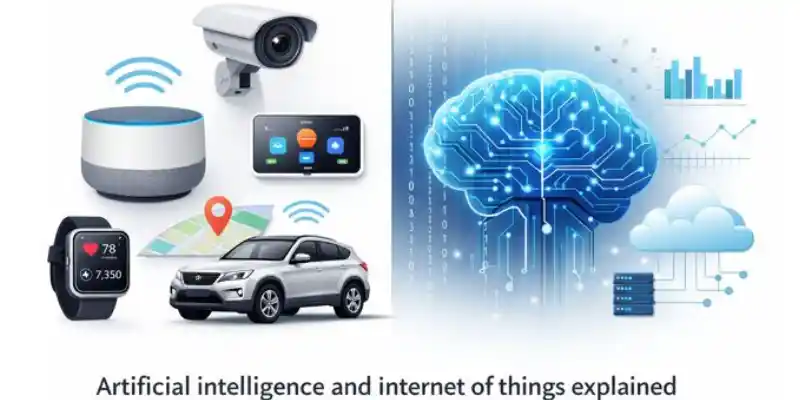
AI and IoT are two different technologies, but they work best together. IoT connects physical devices to the internet so they can share data. AI uses that data to think, learn, and act. When combined, artificial intelligence and the Internet of Things create smart systems that can work with little human help. These systems collect data, study it, and make fast decisions. This is why AI and IoT are used in homes, cities, and industries today.
What Is the Internet of Things (IoT)?
The Internet of Things (IoT) is a network of devices connected to the internet. These devices collect data and share it with other systems. IoT enables devices to communicate using sensors, software, and networks. Technologies like Wi-Fi, cloud platforms, and edge computing allow these devices to work. Strong IoT device connectivity helps systems run smoothly and share data in real time.
Key points:
- Connects devices to the
- Uses sensors to collect data
- Enables real-time communication
- Supports automation and control
Example:
A smart fitness band tracks steps and heart rate. It sends data to a mobile app using the internet.
What Is Artificial Intelligence (AI)?
Artificial intelligence (AI) helps machines think like humans. AI systems study data, learn patterns, and make decisions. Machine learning allows AI to learn from past data. Deep learning helps handle complex data like images and voice. AI decision-making helps systems act without human input.
Key points:
- Learns from data
- Finds patterns
- Makes smart decisions
- Improves over time
Example:
A voice assistant understands your voice and answers questions using AI.
How Do AI and IoT Work Together?
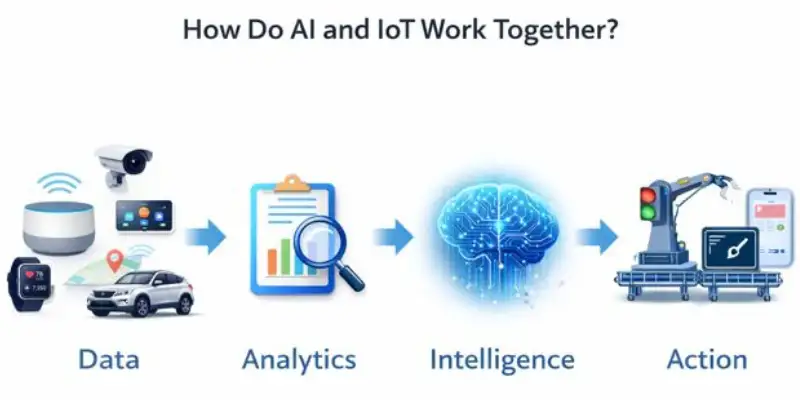
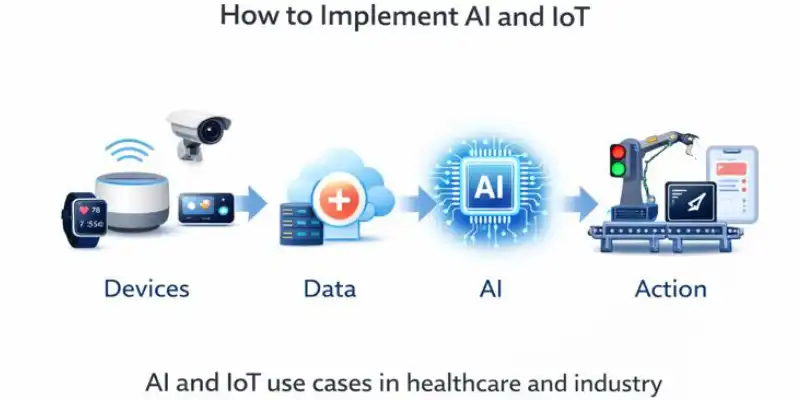
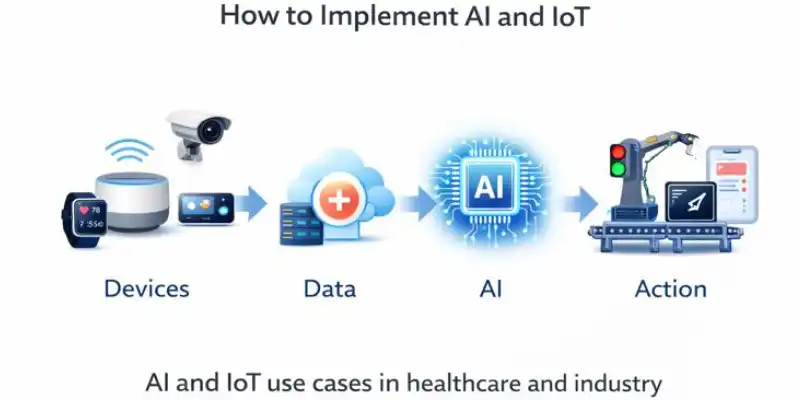
AI and IoT work together to turn data into action. IoT devices collect data from the real world using sensors. AI analyzes this data and finds useful patterns. Then AI makes smart decisions and sends commands back to devices. This full process is known as internet of things integration, where artificial intelligence and the Internet of Things create intelligent systems.
Key steps (Data → Action):
- IoT devices collect real-time data
- Data is sent to cloud or edge systems
- AI analyzes the data
- AI adds intelligence and insights
- Devices take automatic action
Example:
In a smart parking system, IoT sensors detect empty spaces. AI studies the data and guides drivers to free spots.
Role of Machine Learning in IoT
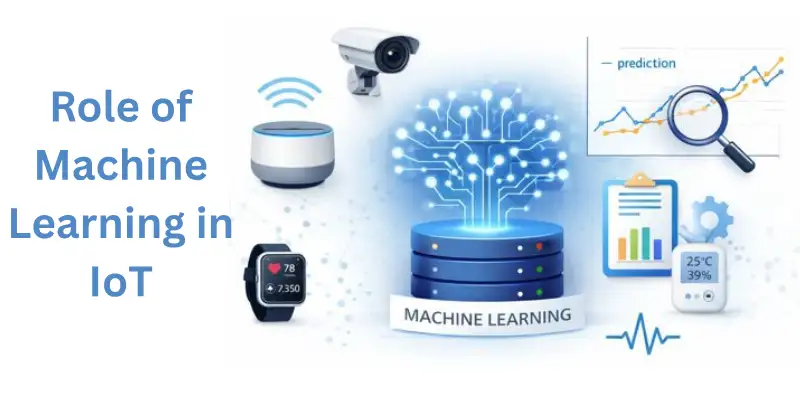
Machine learning plays a key role in AI and IoT systems. IoT devices collect large amounts of data every day. Machine learning in IoT helps systems learn from this data and improve over time. It allows devices to predict problems and act early. This is why IoT machine learning is important for smart and efficient systems.
Machine Learning for IoT Devices
Machine learning with IoT helps devices become smarter with use. It studies past data and improves future actions. Internet of things machine learning supports automation and better control.
Key points:
- Learns from device data
- Predicts failures early
- Improves accuracy over time
- Reduces manual work
Example:
A smart washing machine learns usage patterns. It suggests the best wash cycle using machine learning.
IoT + Deep Learning
IoT deep learning handles complex data like images and sound. It supports AI-powered predictions and real-time analytics. This helps systems react faster and with more accuracy.
Key points:
- Processes complex sensor data
- Supports image and voice analysis
- Enables fast decision-making
- Improves real-time response
Example:
Smart cameras use deep learning to detect motion and send alerts instantly.
Intelligent IoT (AIoT – Artificial Intelligence of Things)
AI and IoT come together to form Intelligent IoT, also known as AIoT (Artificial Intelligence of Things). In this model, IoT devices do more than connect and share data. AI adds thinking power to these systems. AI of Things allows devices to learn, adapt, and act on their own. Artificial intelligence of things improves system performance with time. With IoT machine intelligence, devices turn data into smart actions. This is why AI and IoT play a key role in building modern intelligent systems.
How Intelligent IoT Works
Intelligent IoT uses AI to control and improve connected devices. These systems learn from data and respond without human input.
Key features:
- Smart sensors that collect real-time data
- Autonomous decision-making using AI
- Self-learning IoT systems that improve accuracy
- Faster actions powered by AI and IoT
Example:
A smart energy system uses sensors to track usage. AI learns patterns and adjusts power supply to reduce waste.
Benefits of AI and IoT
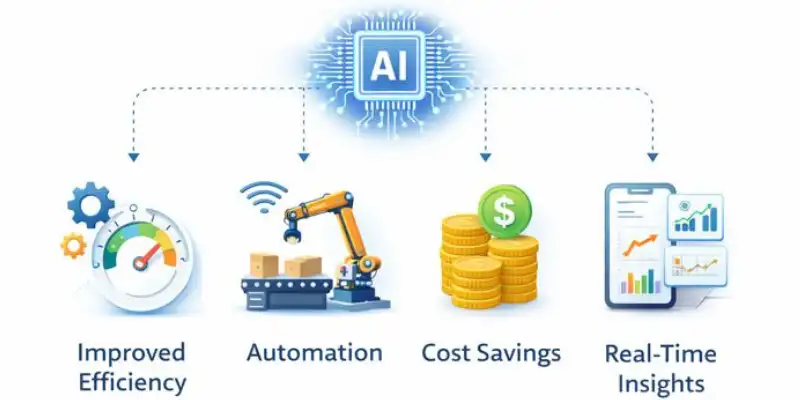
AI and the Internet of Things (IoT) make smart changes to both work and everyday life. When these technologies work together, they make systems more accurate and dependable. AI and the Internet of Things help make decisions better and cut down on manual work. The result speeds up processes and saves money. That is why many businesses use AI and the Internet of Things.
Improved IoT Efficiency
AI and IoT work together to make IoT better by automating tasks and finding problems before they happen. AI looks at data from devices to help with predictive maintenance. This helps the system stay up and running and saves time.
Key benefits:
- Automated operations
- Predictive maintenance
- Reduced downtime
- Lower costs
Example:
A factory uses sensors to monitor machines. AI predicts faults and schedules repairs.
How Has the IoT Benefited Consumers?
AI and IoT improve everyday life for consumers. Smart devices respond quickly and learn user habits. These systems offer comfort, safety, and health support.
Key benefits:
- Smart homes with voice control
- Wearables for fitness tracking
- Healthcare monitoring devices
- Personalized user experience
Example:
A smartwatch tracks sleep patterns. AI suggests better sleep routines.
Better Decision-Making with Real-Time Data
AI and IoT help organizations make better decisions using live data. IoT collects real-time information, and AI turns it into useful insights. This leads to faster and smarter actions.
Key benefits:
- Real-time data analysis
- Faster decision-making
- Accurate predictions
- Improved planning
Example:
A delivery company tracks vehicles using IoT. AI selects faster routes to save fuel and time.
AI and IoT Use Cases (Real-World Examples)
AI and IoT are creating real value across many industries. These technologies help systems work smarter and faster. By using artificial intelligence and the Internet of Things, businesses reduce costs and improve services. This is why AI and IoT use cases are growing worldwide. Let’s look at some real-world examples where this technology makes money and impact.
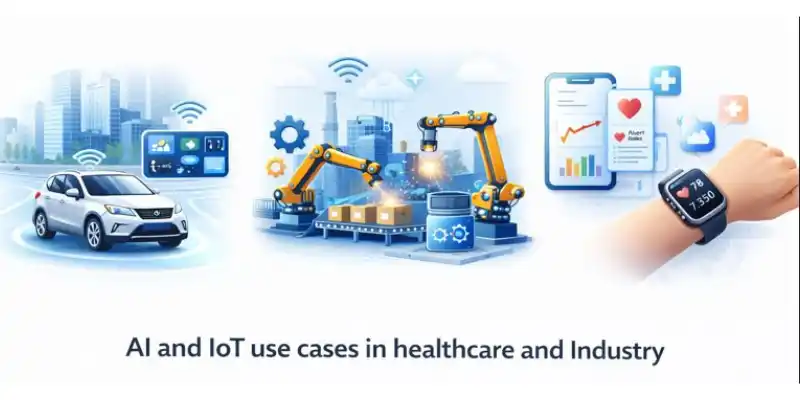
Internet of Things for Cars
AI and IoT make vehicles smarter and safer. IoT sensors collect data from cars, and AI analyzes it to improve driving and maintenance.
Key uses:
- Predictive vehicle maintenance
- Smart navigation systems
- Driver safety alerts
- Fuel efficiency tracking
Example:
A connected car warns the driver before engine failure using AI and IoT data.
Industrial IoT (IIoT)
AI and IoT power smart factories through Industrial IoT. Machines share data, and AI improves production.
Key uses:
- Machine performance tracking
- Predictive maintenance
- Automated production lines
- Reduced downtime
Example:
A factory uses AI to detect machine faults before breakdowns.
Smart Cities
AI and IoT help cities manage resources better. Sensors collect data, and AI supports smart decisions.
Key uses:
- Traffic control systems
- Smart street lighting
- Waste management
- Energy
Example:
AI adjusts traffic lights based on live traffic data.
Healthcare
AI and IoT improve patient care and safety. Devices track health data in real time.
Key uses:
- Remote patient monitoring
- Health alerts and reports
- Smart medical device
- Faster diagnosis
Example:
Wearable devices alert doctors when patient vitals change.
IoT for Machines
AI and IoT help machines work efficiently and safely. Data-driven intelligence reduces failure risks.
Key uses:
- Machine health monitoring
- Automated control system
- Performance optimization
- Energy efficiency
Example:
AI predicts machine wear and schedules maintenance early.
How to Implement AI and IoT
It is important to plan ahead and take small steps when using AI and IoT. First, the devices need to get the right information. Then, AI uses this information to make smart choices. Artificial intelligence and the Internet of Things work best when systems can grow and are safe. A good setup makes it easy for devices to connect, learn, and do things. Many businesses are now focusing on how to use AI and IoT properly because of this.
How to Develop an IoT Device
To develop an IoT device, start with the right hardware and connectivity. An IoT appliance needs sensors, software, and a network. Strong IoT device connectivity helps devices send data without delay.
Key steps:
- Choose sensors and hardware
- Set up internet connectivity
- Connect to cloud or edge systems
- Test device performance
Example:
A smart light uses sensors and Wi-Fi to connect with a mobile app.
Implementing AI in IoT Systems
Implementing AI in IoT systems adds intelligence to devices. Data is collected, processed, and analyzed by AI models. This supports smooth internet of things implementation and automation.
Key steps:
- Collect and clean device data
- Train AI or machine learning models
- Deploy AI for real-time decisions
- Monitor and improve system
Example:
A smart security system uses AI to detect unusual activity and send alerts.
AI in IoT Market Trends
The AI and IoT market is growing fast across the world. Businesses use AI in IoT market solutions to save costs and improve performance. More devices now connect with smart systems every day. This growth shows strong future scope for artificial intelligence and the Internet of Things. Want to know where this market is heading? The trends are very promising.
Growth and Future Scope
AI and IoT adoption is rising in many industries. Smart devices, automation, and data use drive this growth.
Key trends:
- Rapid growth of AI and IoT solutions
- Increased use in healthcare and industry
- Rising demand for smart automation
- Strong future market expansion
Example:
Many factories now invest in AI and IoT to reduce machine downtime.
Generative AI + IoT (Advanced Edge)
AI and IoT now include generative AI at the edge. This helps devices create insights without cloud delay. It improves speed and privacy.
Key trends:
- Faster edge decision-making
- Reduced data transfer costs
- Smarter device responses
- Better real-time performance
Example:
Smart cameras analyze video on-device using generative AI and IoT.
Challenges of AI and IoT Integration
AI and IoT offer many benefits, but they also bring challenges. When artificial intelligence and the Internet of Things work together, systems must stay secure and reliable. Managing large data and many devices is not easy. Businesses must plan carefully to avoid risks. Understanding these challenges helps in better AI and IoT integration.
Security Risks
AI and IoT systems connect many devices to the internet. This increases security risks.
Key issues:
- Device hacking threats
- Weak network protection
- Unauthorized access
- System vulnerabilities
Example:
A smart camera without updates may allow hackers to access video data.
Data Privacy Issues
AI and IoT collect large amounts of personal data. Protecting this data is very important.
Key issues:
- User data exposure
- Poor data storage methods
- Lack of privacy controls
- Compliance challenges
Example:
A fitness tracker stores health data that must stay private.
Scalability Problems
Scaling AI and IoT systems is challenging as devices increase. Systems must handle more data smoothly.
Key issues:
- Network overload
- Slow system response
- Device management issues
- High infrastructure demand
Example:
A smart city system slows down as more sensors are added.
High Implementation Cost
AI and IoT systems need strong infrastructure and tools. This increases initial costs.
Key issues:
- Expensive hardware
- High setup costs
- Maintenance expenses
- Skilled staff requirement
Example:
Small businesses struggle to afford full AI and IoT solutions.
Future of AI and IoT
The future of AI and IoT looks very strong and exciting. New tools help devices become smarter and faster. Artificial intelligence and the Internet of Things will focus more on data insights and quick action. Advanced internet of things analytics will turn raw data into clear results. These changes will shape how systems work in the coming years.
IoT Analytics and Use Cases
AI and IoT rely on data analytics to improve performance. IoT analytics use cases help systems predict and respond better.
Key trends:
- Real-time data analysis
- Better performance insights
- Faster problem detection
- Smarter business decisions
Example:
A retail store tracks customer movement. AI analyzes data to improve store layout.
Autonomous Systems
AI and IoT will drive fully autonomous systems. Devices will act without human control.
Key trends:
- Self-operating machines
- Automated decision-making
- Reduced human effort
- Higher efficiency
Example:
Self-driving delivery robots use AI and IoT to move safely.
Edge AI
Edge AI brings intelligence closer to devices. AI and IoT systems will process data at the edge instead of the cloud.
Key trends:
- Faster response times
- Lower data transfer costs
- Improved data privacy
- Real-time processing
Example:
Smart cameras analyze video on-device and send alerts instantly.
Conclusion
AI and IoT are shaping the future of connected technology. The Internet of Things connects devices, while AI adds intelligence to make them smart and useful. Together, artificial intelligence and the Internet of Things improve efficiency, automation, and decision-making. From smart homes to industries, these systems reduce effort and increase value.
The benefits of AI and IoT include better performance, cost savings, and real-time insights. Intelligent systems learn from data and improve with time. In the future, AI and IoT will power smarter cities, healthcare, and businesses. Are you ready to adopt this technology and stay ahead? The smart future has already begun.
AI and IoT work together to make devices smart. IoT connects devices to the internet. AI helps those devices think and make decisions. Together, they create intelligent systems that work on their own.
AI and IoT are powerful because IoT collects data and AI understands it. AI turns raw data into smart actions. This helps systems work faster, better, and with less human effort.
Intelligent IoT (AIoT) means IoT devices with AI built in. These devices can learn from data and act automatically. AIoT helps systems improve over time without manual control.
AI and IoT are used in smart homes, cars, factories, healthcare, and smart cities. They help save energy, improve safety, and reduce costs.
AI and IoT are used in smart homes, cars, factories, healthcare, and smart cities. They help save energy, improve safety, and reduce costs
Yes, small businesses can use AI and IoT with simple tools. Cloud platforms and smart devices make adoption easier and more affordable.






- Be Respectful
- Stay Relevant
- Stay Positive
- True Feedback
- Encourage Discussion
- Avoid Spamming
- No Fake News
- Don't Copy-Paste
- No Personal Attacks
- Be Respectful
- Stay Relevant
- Stay Positive
- True Feedback
- Encourage Discussion
- Avoid Spamming
- No Fake News
- Don't Copy-Paste
- No Personal Attacks
