How AI in Travel is Transforming the Future: Insights, Tools, and Trends
Published: 22 Jan 2026
AI in travel is making it better as it changes. Technology is making travel easier and more personal. For example, AI travel agents can book trips for you, and AI-powered tools can suggest the best places to visit. AI in travel is making it possible for more people to get personalized trips. It can help with everything from flights to activities. AI has made it possible for travelers to have smoother and more pleasant experiences. In this article, we’ll talk about how AI is making travel better in the areas of tourism, hospitality, and transportation. We’ll also give real-life examples of how it’s changing the way we travel in the future.
What is AI in Travel?
Artificial Intelligence (AI) is changing the way the travel industry works. It helps make travel planning easier, faster, and more personalized. AI can analyze large amounts of data and make decisions that humans would take much longer to do. It’s used in different parts of travel, from booking tickets to providing customer service.
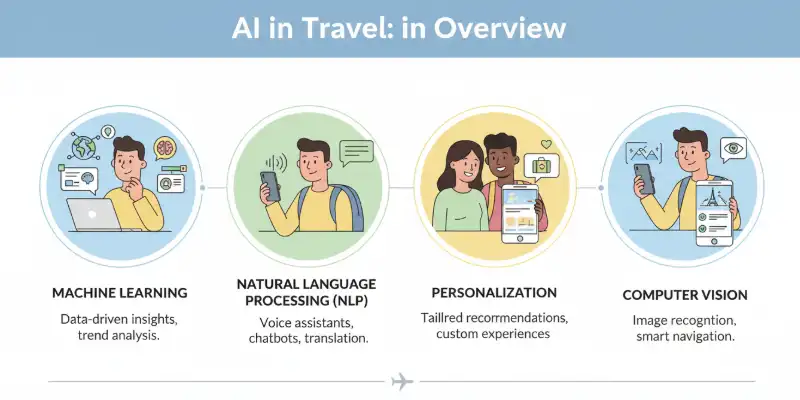
Key Technologies in AI for Travel
AI in travel uses several advanced technologies:
- Machine Learning: This technology helps systems learn from data and make decisions without being programmed for every task. For example, travel apps can recommend flights or hotels based on your preferences and past behavior.
- Natural Language Processing (NLP): NLP helps machines understand and respond to human language. AI chatbots use NLP to answer customer questions, helping travelers get quick responses without waiting for a human agent.
- Generative AI: This technology uses data to make things like travel plans or personalized suggestions. It can make personalized vacation plans based on things like the user’s budget and travel style.
Quick Facts about AI in Travel
- AI chatbots help airlines and hotels handle customer queries, improving response times.
- Booking systems are increasingly automated, reducing errors and saving time for travelers.
- AI is used in predicting travel trends, helping companies offer better deals.
Key Areas Where AI is Changing Travel
AI in travel is making big changes in how we travel. It helps in many areas like planning trips, booking, and even getting around. AI in travel is not just about robots; it’s about making travel easier and more fun for everyone.
AI-Powered Travel Agents
- Personalized Travel Planning: AI in travel helps make travel plans that fit you. It looks at your choices and suggests the best places, flights, and hotels for your trip.
- Real-Time Booking Optimization: AI in travel can adjust your bookings when things change, like price drops or new availability.
- AI Chatbots and Virtual Assistants: Travel agencies use AI chatbots to answer questions quickly, helping travelers 24/7.
Example: AI travel agents like Pana and Mezi use AI in travel to create custom travel plans that fit your needs and preferences.

AI in Tourism
- Personalizing Tourist Experiences: AI in travel makes trips special by suggesting things to do based on your past behavior and interests.
Example: AI in travel tools suggest local spots or hidden attractions, helping tourists discover new places they might miss otherwise.

AI in Hospitality
- Smart Hotels: Hotels use AI in travel to give guests a personalized experience, from room settings to activity suggestions.
- Chatbots for Booking and Customer Service: Many hotels use AI chatbots to make booking easier and provide quick help.
Example: Marriott’s AI concierge uses AI in travel to speed up check-ins and check-outs, offering better service to guests.
AI in Transportation
- Autonomous Vehicles: AI in travel is making self-driving cars possible, changing how we get from one place to another.
- AI in Flight Booking :AI in travel helps you find the best flights and even tells you when they might be late, which makes travel more efficient.
- Route Optimization: AI in travel can suggest the fastest routes, saving time and avoiding traffic.
Example: AI-powered flight apps use AI in travel to predict delays and suggest better routes, so travelers can have a smoother journey.
The Role of Generative AI in Travel
Generative AI is transforming the way we plan and travel. By personalizing content and recommendations to their preferences, it enables travelers to have unique, customized experiences. Travelers are now using AI to create customized travel content and flexible plans, enhancing the entire experience.
What is Generative AI and How is it Enhancing the Travel Experience?
Generative AI is a type of AI that creates new content. In travel, it’s used to make personalized itineraries, travel guides, and even social media posts for travelers. By analyzing data, it generates suggestions based on a traveler’s interests, budget, and previous travel behavior.
Example: Travel agencies are now using generative AI to make personalized travel plans. For example, if a traveler likes adventure and nature, the AI will suggest trips that include hiking, camping, and other activities outside.
AI Content Generation
- Making Travel Plans That Are Just Right for You: Generative AI helps travel agencies make plans that are just right for each traveler.
- Social Media Content: AI in travel can also generate content for travel agencies to post on social media, promoting destinations and services in a personalized way.
Example: AI in travel agencies uses generative AI to help create dynamic itineraries for clients, suggesting activities and destinations based on their personal tastes.
How AI Improves Operational Efficiency for Travel Businesses
AI in travel is helping businesses save time and money by organizing tasks and improving efficiency. Travel agencies, airlines, and other businesses are using AI to streamline their operations, boost customer service, and optimize marketing efforts. Let’s explore how AI in travel is making a difference.
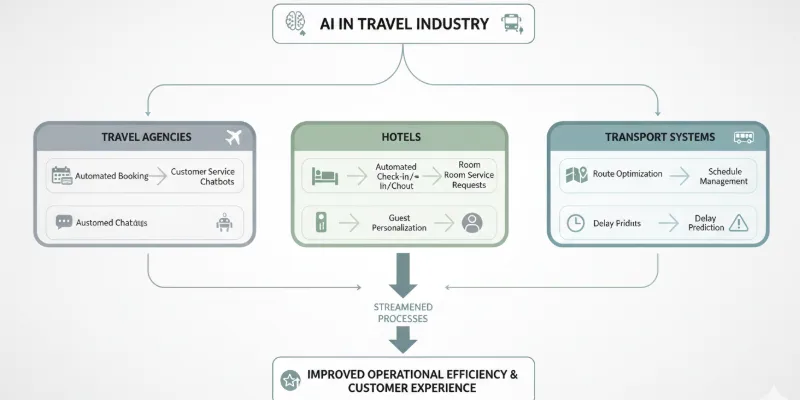
Automating Customer Service
- Chatbots and Virtual Assistants: AI-powered chatbots are now handling customer inquiries, providing instant responses to common questions and booking requests. This helps reduce the need for human agents and speeds up service.
- Automated Responses: AI can send automatic replies to customers, confirming bookings or answering frequently asked questions, allowing businesses to offer 24/7 support.
Example: Many travel businesses use AI to provide quick, automated responses to customer inquiries, increasing service efficiency.
Improved Marketing
- AI-Powered Recommendation Engines: AI in travel is used to suggest services and upgrades to customers based on their previous purchases or travel preferences. This helps businesses upsell services and increase revenue.
Example: Travel websites use AI-powered recommendation engines to suggest upgrades like premium seating or luxury hotel rooms, leading to higher sales.
Supply Chain Optimization
- AI for Logistics: AI helps the travel and transportation industries improve their supply chains by predicting demand, keeping track of inventory, and making transportation work better. The result means better service and lower price
Example:Airlines use AI to keep track of their fleets, figure out when maintenance is needed, and make sure that flights leave on time. This cuts down on delays and costs.
Case Study: How AI Helped Travel Agencies or Airlines Reduce Operational Costs
AI in travel has been proven to lower operational costs. For example, airlines use AI-powered systems to streamline their flight schedules and reduce fuel costs. Travel agencies use AI to automate booking processes, saving time and improving accuracy.
Ethical Considerations: The Use of AI in Travel
As AI in travel becomes more common, it’s important to think about how it affects both users and businesses. This includes how personal data is handled and how fair the recommendations and decisions are. Let’s look at these ethical concerns and some best practices for using AI in travel.
Data Privacy
- Handling User Data: AI in travel uses personal data to suggest things like trips or hotels. It’s important for travel companies to keep this data safe and respect people’s privacy.
Example: Travel apps must make sure they protect user data and don’t share it without permission.
Bias and Transparency
- Fair Recommendations: Sometimes, AI can make biased suggestions based on old data. It’s important to make sure that AI gives fair and balanced recommendations to all users.
- Clear Decision-Making: Travel companies should explain how their AI makes decisions, like picking a flight or hotel, so customers understand the process.
Example: When using AI, travel businesses should avoid repeating the same recommendations and offer fresh options to users.
Best Practices for Ethical AI Use in Travel Agencies and Tourism Companies
- Clear Data Use Policies: Travel companies should tell customers how their data is being used and give them control over it.
- Regular Checks of AI Systems: Businesses should regularly check their AI tools to ensure they are fair and transparent.
Example: A travel agency using AI should regularly review their systems to avoid bias and ensure recommendations are fair for all travelers.
Future Trends: What’s Next for AI in Travel?
The future of AI in travel is exciting. As technology gets better, it will change how we plan trips and experience new places. Let’s look at what’s coming next for AI in the travel world.
The Next Steps in AI Evolution in the Travel Industry
- More Automation: AI in travel will keep making travel planning easier. It will help book flights, hotels, and activities faster and with more accuracy.
- Better Personalization: As AI improves, it will offer more personalized travel suggestions based on your needs and preferences.
Example: In the future, AI will automatically change your trip plans if something unexpected happens, like bad weather or a flight delay.
How AI Will Further Automate Travel Planning and Enhance Customer Experience
- Easier Trip Planning: AI in travel will handle even more parts of planning, like booking everything for you from start to finish.
- Faster Customer Service: AI will continue to improve customer support, offering fast help whenever you need it, even at night.
Example: Today, AI is already helping people book tickets and giving quick answers to questions through chatbots.
Expert Predictions on the Future of AI Travel Agents and AI-Powered Tourism Apps
- AI Travel Agents: Experts believe that in the future, AI will help plan very complex trips, update plans in real-time, and make everything smoother for travelers.
- Smarter Tourism Apps: AI in travel will make tourism apps even smarter, giving travelers better suggestions on what to do, where to go, and what to see.
Example: In the future, AI-powered apps will give you personalized ideas on activities and places to visit based on your interests.
How to Get Started with AI for Your Travel Business
If you’re looking to improve your travel business, AI in travel is a great place to start. It can help automate tasks, improve customer service, and make your business run more smoothly. Here’s how you can get started with AI in your travel business.
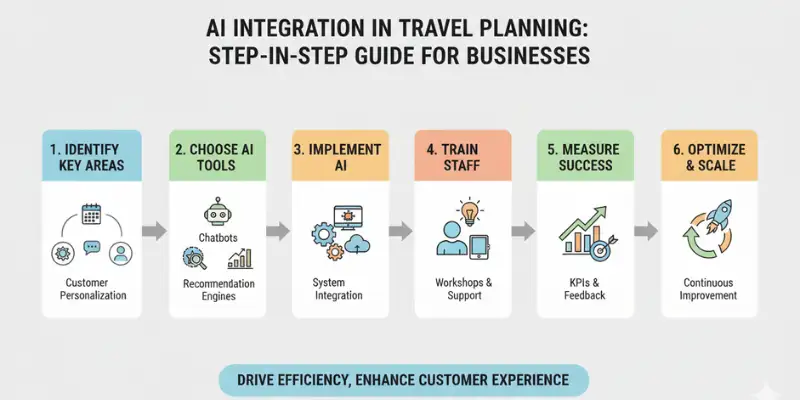
Steps for Businesses to Implement AI
- Choose the Right Tools: Start by finding AI tools that match your business needs. There are platforms that help with booking, customer service, and marketing.
- Understand the Technology: Learn about the AI technologies that can help your business, like machine learning, chatbots, and AI-powered recommendation engines.
- Start Small: Begin with one area of your business, like customer service or marketing, and test how AI can help before expanding to other areas.
- Train Your Team: Make sure your employees understand how to use AI tools and integrate them into their work.
Example: Platforms like Pana and Mezi are already changing the way travel businesses handle customer service and booking by using AI to automate tasks and provide personalized experiences.
Conclusion
In short, AI is changing the travel industry by making it easier, faster, and more tailored to each person. There are clear benefits for both travelers and businesses: AI travel agents can help with bookings, and AI-powered tools can make the whole experience better. Some of these benefits are more convenience, personalization, and efficiency.AI in travel will keep getting better as time goes on, giving us even more exciting choices. It could completely change how we travel and how we interact with the world.
If you’re ready to experience the future of travel, start exploring AI tools today whether for planning your next adventure or improving your travel business. The future is waiting, and AI in travel is the key to unlocking it!
AI in travel helps travel agencies automate tasks like bookings, answer customer questions, and provide personalized travel recommendations, improving efficiency.
AI in travel personalizes experiences by analyzing customer preferences and past trips, then suggesting destinations, hotels, and activities based on that data.
AI in travel can handle tasks like booking and answering questions, but it cannot fully replace human travel agents for complex or personalized service
Yes, if used responsibly, AI in travel can be safe, but businesses must ensure data privacy and fairness in AI-driven decisions.
Some popular AI tools include chatbots for customer service, AI-powered recommendation engines for bookings, and AI-based travel planning apps like Pana and Mezi.






- Be Respectful
- Stay Relevant
- Stay Positive
- True Feedback
- Encourage Discussion
- Avoid Spamming
- No Fake News
- Don't Copy-Paste
- No Personal Attacks
- Be Respectful
- Stay Relevant
- Stay Positive
- True Feedback
- Encourage Discussion
- Avoid Spamming
- No Fake News
- Don't Copy-Paste
- No Personal Attacks
