Say Goodbye to Bugs with AI Regression Testing”
Published: 22 Dec 2025
Struggling to keep software updates bug-free without hindering development? You’re not alone. Ensuring new features don’t disrupt existing ones is a common challenge. This guide explores how AI regression testing can solve this problem, improving software testing accuracy, speed, and efficiency while reducing manual effort.. You’ll discover how AI can speed up testing, identify problems automatically, and even lower the cost of manual testing. You will have a thorough understanding of AI regression testing and how it can improve the quality and development cycle of your software by the end of this guide
What is AI Regression Testing
AI regression testing leverages intelligent automation to verify if recent software updates have caused issues in existing features. AI enhances the traditional regression testing process by learning from previous test results, identifying issues faster, and automating repeated tasks . By doing so, AI not only makes testing quicker but also more reliable and accurate.
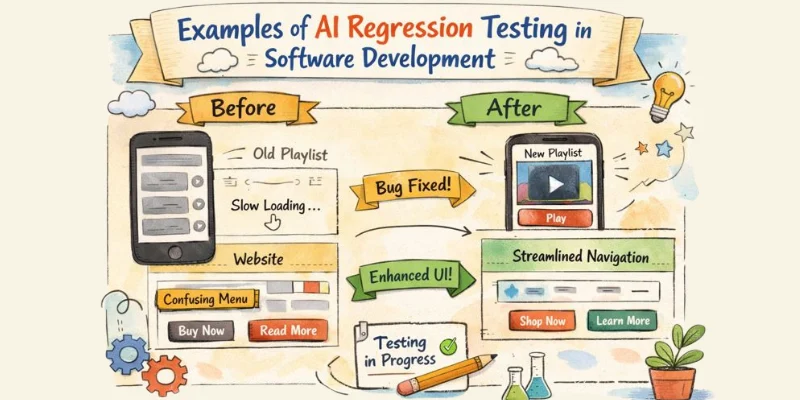
Examples of AI Regression Testing in Software Development
Mobile App Updates
- Keeps Features Working: AI makes sure things like login, notifications, and payments still work after app updates.
- Finds Problems Fast: AI quickly spots issues that might happen because of the update.
- Better User Experience: AI helps make sure updates don’t cause problems for users.
- Saves Time: AI does the same tests over and over, saving developers time.
- Prevents Breakdowns: AI finds issues before they affect users, keeping the app running smoothly.
E-commerce Website
- If a store adds a new product filter, AI tests old features like cart, checkout, and search.
- It alerts the team if something stops working because of the new filter.
Banking Software
- When a bank updates its security system, AI automatically tests old functions like balance checks and money transfers.
- It ensures nothing breaks during the update.
Online Booking System
It spots layout or function issues quickly
If a travel site changes its design, AI checks if booking, canceling, and editing trips still work.
AI Regression Testing Tools: Choosing the Right Solution for Your Needs
In this section, we’ll dive into the top AI regression testing tools for automated software testing. These tools help developers improve software quality by identifying bugs and ensuring seamless functionality.”. These tools are designed to automate testing processes and help identify issues in your software without manual intervention. Whether you’re a beginner or an experienced developer, knowing which tool suits your project can save time and enhance accuracy.
- Popular AI Regression Testing Tools
Here, we’ll explore the top AI testing tools like Test.ai, Applitools, and Functionize. - How to Choose the Right Tool for Your Project
Consider your team’s skill level, the difficulty of the software, and the specific features each tool offers.
Example: For a mobile app update, Test.ai might be an ideal choice as it’s known for fast, reliable automation and can handle complex scenarios across multiple devices.
How AI Helps in Regression Testing: Boosting Efficiency and Reducing Bugs
AI-powered regression testing is a game-changer in software development. In this section, we’ll cover how AI accelerates testing by automating difficult tasks, increasing accuracy, and identifying issues early on.
- Speeding Up the Testing Process
AI greatly reduces human effort by quickly detecting the parts of your software that require testing. - Reducing Errors and Bugs
AI guarantees that bugs or errors are discovered early in the testing cycle because of its capacity to identify small changes.
Example:AI regression testing guarantees that the checkout and payment procedures continue to function properly when an e-commerce website adds a new feature, avoiding bugs that might affect user experience.
What is Machine Learning Regression Testing?
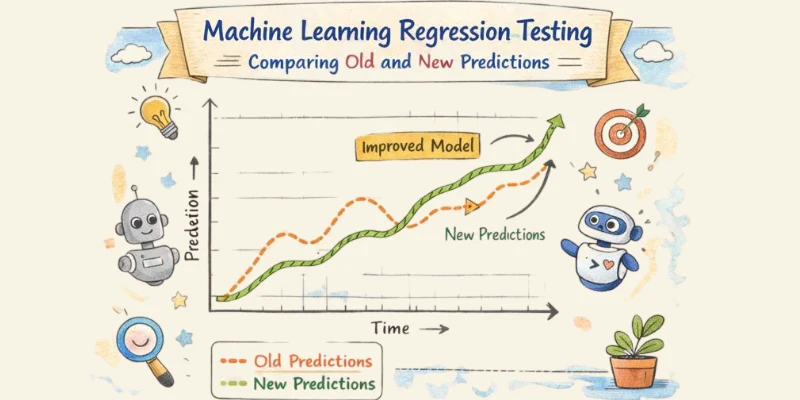
The process to establish whether an ML model continues to produce reliable and accurate results after an update is known as machine learning regression testing. Comparing old and new forecasts helps prevent harmful changes. This testing ensures that the model retains its accuracy, performance, and reliability even with the addition of new data or features.
Simple Examples of Machine Learning Regression Testing
- Spam Filter
A spam detection model is updated with new data. Regression testing checks old emails to make sure the model still correctly separates spam from real messages. - Price Prediction
A model used to predict house prices is retrained. Regression testing compares old predictions with new ones to ensure the model didn’t become less accurate. - Recommendation System
A video streaming app updates its recommendation model. Regression testing checks if the model still suggests the right type of videos users liked before. - Image Recognition
A model that identifies animals in photos gets new training images. Regression testing makes sure it still correctly identifies animals it handled well before. - Fraud Detection
A bank updates its fraud detection model. After the update, regression testing verifies that actual purchases are not mistakenly reported as illegal.
Machine Learning Regression Testing Benefits: Why It’s Essential for Your ML Models
Updates are necessary for machine learning models, but they can cause issues. Regression testing for machine learning makes sure that, even after updates, your model keeps producing reliable and accurate outcomes. Let’s see how regression testing is important for maintaining the performance of ML models.
- Ensuring Consistency Across Updates
Regression testing helps to verify that the performance of your machine learning model does not degrade over time with new data or algorithms. - Maintaining Accuracy After Retraining
Regression testing verifies that the new model’s predictions match those of the old model after updating it with new data.
Example:New transaction data is used to update a bank’s fraud detection model. Regression testing with AI makes sure that the updated model doesn’t identify actual transactions as fraud.
Difference Between AI Regression Testing and Machine Learning Regression Testing
| Features | Ai Regression Testing | Machine Learning Regression Testing |
| What it tests | Software features and functions | Machine learning model performance |
| Main Goal | Make sure new updates don’t break old features | Machine learning model performance |
| Focus Area | Speed, automation, reduced manual work | Prediction accuration and validation |
| How its work | AI runs repeated tests and finds issues in software | Old and new model results are compared to spot changes |
| Used for | Apps, websites, systems | ML models like spam filters, price predictor and image recognization |
| Example | AI checks if login still works after adding a new feature | Verifying if a revised spam model can still accurately detect spam |
How AI Improves Regression Testing
AI makes regression testing easier, faster, and more accurate. It cuts down on the work that has to be done over and over again, which usually takes a long time. It also helps teams find mistakes early on, which keeps the software stable after each change.
Testing cycles accelerate
- AI quickly looks over the software and finds parts that need to be tested.
- It cuts down on the time spent on running the same tests over and over.
- Teams can finish testing and get updates out to users more quickly.
Fewer Bugs and Mistakes
- AI sees small changes that could lead to problems.
- It finds mistakes early on, before they can spread to other parts of the software.
- This means that updates are more stable and users have fewer problems.
Better Test Coverage
- AI checks more parts of the software in a shorter amount of time.
- It helps make sure that no important area is missed.
- This gives a fuller and more in-depth look at the whole system.
- Tests for regression are conducted automatically.
- AI does many tests on its own, without any help from people.
Why AI Regression Testing is Critical for Software Stability and Performance
AI regression testing is essential to ensuring the stability and performance of your software after updates. By running automated tests and comparing results, AI helps detect potential regressions that could harm user experience.
- Continuous Testing with AI
Continuous regression testing made possible by AI guarantees that no software component is missed during development cycles. - Faster Feedback for Developers
With AI, developers receive immediate feedback about any issues, allowing them to make quick adjustments without delaying the project.
Example: For a banking app, after every small update, AI regression testing ensures that key functions like balance checks and money transfers remain stable.
AI Regression Testing: Reducing Costs and Time for Developers
One of the major advantages of AI regression testing is its ability to save time and money. By automating the repetitive aspects of testing, AI frees up your team to focus on more difficult tasks.
- Lower Testing Costs
AI reduces the need for a large testing team, especially when testing difficult features, making it a cost-effective solution. - Faster Release Cycles
When automated tests run at the same time as development, updates reach users faster without causing problems.”
Example: A mobile app company uses AI regression testing to automate login tests after each update, saving hours of manual work and ensuring quick releases.
How Does Regression Testing Work in Machine Learning?
Regression testing in machine learning makes sure that changes made to a model do not break the parts that were already working. When developers update a model, add new data, or change its settings, there is a chance that the model’s old predictions may start giving negative outcomes. Regression testing helps catch these problems early so the model stays accurate and reliable.
- Use the same old test data: To see if the model continues to produce stable results, it is tested once more using the previous dataset.
- Compare old and new predictions: To identify any unexpected changes, the model’s new predictions are compared with its previous ones.
- Verify accuracy and performance: Following the update, the team verifies whether accuracy, speed, or other performance metrics have decreased.
- Identify undesirable changes: The test indicates a regression if the model abruptly performs worse on a section that previously performed well.
- Repair and retest: After fixing the problem, the model is tested once more until both the old and new results appear trustworthy.
Case Studies / Real-Life Examples
AI is already helping many teams improve the way they test their software. It makes the process faster, finds more mistakes, and reduces the amount of repeated work. These short examples show how AI has helped in real situations.
- Mobile App Company: AI tested old features after each update and found hidden bugs, helping the team fix issues much faster.
- Online Shopping Website: AI checked important functions like search, cart, and checkout and caught mistakes early, saving the team many hours of manual testing.
- Banking App: AI ran daily tests automatically and made sure money transfers, balance checks, and login features stayed stable after every small change.
- Travel Booking Platform: AI helped the team check thousands of pages quickly and spotted problems that could have delayed bookings for customers.
- Gaming Company: AI tested older game levels when new ones were added and caught errors before the update was released.
- Education App:Every time a new version was released, AI verified the lessons, tests, and updates, making the release more reliable and easy to use.
AI Regression Testing Tools for E-commerce Websites: Best Practices for Smooth Updates
E-commerce websites are always adding new features and updates. In this section, we’ll explore AI regression testing tools for online stores and show how they help make sure important parts, like the shopping cart or checkout, keep working properly.
- Ensure Seamless User Experience
Keep the user experience smooth by using AI to test key features like search, cart, and checkout every time you add something new. - Automate Cross-Device Testing
AI can run tests on many devices automatically, making sure updates work well on all platforms.
Example: After adding a new product filter to an e-commerce site, AI tests whether the cart and checkout features still function properly, helping the team release updates without Problems for users
How to Get Started with AI Regression Testing: A Step-by-Step Guide
If you’re new to AI regression testing, start with this simple guide to add it to your development process. Begin with small steps, and you’ll quickly notice benefits like less manual work and faster, more accurate testing.
- Choose the Right Tool
Choose an AI testing tool that matches your team’s skills and project needs. Pick one that’s easy to use, works well with your current setup, and can grow as your project grows. - Automate Repeated Tests
Use AI to automate repeated regression tests for features that change often, such as login, notifications, and payments.
Example: Begin with AI tools for simple tests, like checking the user interface or basic features, and slowly move on to more difficult testing situations.”
Emotional Appeal – Why You Need AI in Your Testing Workflow
Software testing can be time-consuming and stressful, especially when repeatedly checking for errors. AI regression testing simplifies this by automating checks, reducing errors, and boosting confidence in results.
- Helps you stay in control of updates, improving speed and reliability.
- Automates routine checks, saving time and effort.
- Reduces errors and highlights issues you might miss.
- Makes software evaluation easier and less stressful.
Challenges of AI Regression Testing
While AI regression testing brings many benefits, it’s important to know the challenges teams may face. Understanding these challenges helps you prepare better and get the most out of AI in testing.
- Cost: Setting up AI tools can be expensive. For example, a small startup may struggle to afford the software and infrastructure needed.
- Learning Curve: Teams may need time to learn how to use AI tools effectively. For instance, testers new to AI might need training before they can run tests confidently.
- Implementation Complexity: Integrating AI into existing workflows can take effort. A company updating its website may need to adjust current testing processes to include AI.
- Data Requirements: AI works best with good test data, and collecting it can take time. For example, an e-commerce app may need a lot of past user activity to train the AI.
- Dependence on AI: Relying too much on AI may reduce manual checks. For instance, a team might miss small UI issues if they only trust AI results.
- Maintenance: AI systems need regular updates to stay accurate. A banking app’s AI tests may require updates whenever new features are added.
Best Practices for Effective AI Regression Testing
Following the right practices helps you get the most value from AI and makes your testing smoother, faster, and more accurate. These tips ensure that AI works well and supports your team in real situations.
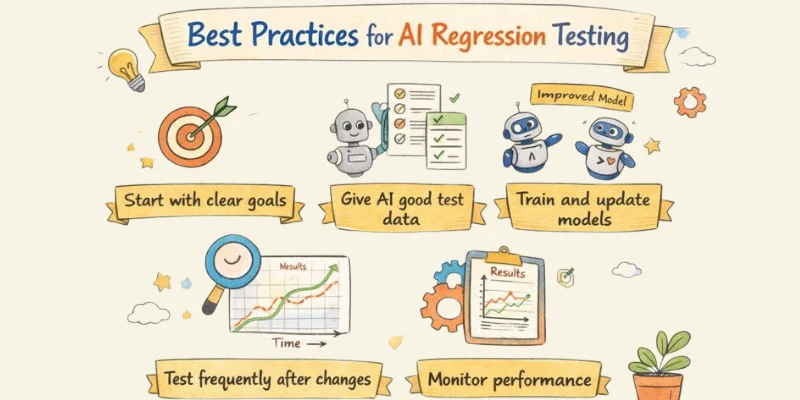
- Start with Clear Goals: Know what you want to achieve.
Example: A mobile app team decides their main goal is to reduce the time spent on repeated login tests. - Give AI Good Test Data: Use clean and organized data so AI can learn correctly.
Example: An e-commerce store provides past checkout and search test cases to help the AI understand common issues. - Begin with Small Areas: Test one small part before applying AI everywhere.
Example: A banking app first uses AI on the balance inquiry feature before expanding to money transfers. - Keep Tests Updated: Update your test cases when new features are added.
Example: A travel website adds a new filter and updates the AI tests so it can check both old and new filters. - Monitor AI Results: Regularly review what AI finds to ensure accuracy.
Example: A game company checks AI-flagged bugs in older levels to confirm they are real issues. - Combine AI with Human Insight: Use AI for speed but keep human checks for sensitive areas.
Example: A health app lets AI test basic functions but testers manually check critical features like report downloads. - Track Improvements: Compare before and after results to measure progress.
Example: A team notices their testing time drops from two days to a few hours after using AI.
Conclusion
AI regression testing helps make software testing faster and reduces bugs. Start by automating small tasks for quicker and more accurate tests. As you get better, use AI to improve your whole testing process. Remember, AI is there to help, not replace you always check the results to find small problems. Gradually use AI more to make testing easier and faster. Keep learning, and AI will improve your testing process.
AI regression testing automates the process of checking whether new software updates break existing features, saving time, improving software quality, and ensuring bug-free updates
No, AI helps a lot, but you should always review results manually to catch small issues.
Not really; you can start with beginner friendly tools and small features.
AI works best with past test results, but you don’t need huge amounts to begin.
If it finds mistakes faster, saves time, and makes testing more consistent, it’s working effectively.
Not exactly. While both use AI, machine learning regression testing focuses specifically on ensuring that your ML models perform accurately after updates.
“Choose tools that fit your project’s size, budget, and needs. Think about how easy they are to use, their automation features, and how well they work with your existing setup.”




Interesting read! How do you see regression testing adapting to Al's non-deterministic behavior?