Best Lovable AI Alternatives & Competitors (Free & Paid) in 2026
Published: 21 Mar 2026
Feeling overwhelAId by all the options out there for app-building tools? You’re not alone. Many developers and creators struggle to pick the right platform that fits their needs. In this guide, we will explore the best Lovable AI Alternatives, compare them side by side, look at real project examples, and give practical tips to help you choose the perfect tool for your workflow. By the end, you’ll know exactly which platform matches your goals and style.
What Is Lovable AI?
Lovable AI is a modern AI coding tool that helps people build apps faster with the help of artificial intelligence. It works like a smart assistant inside a developAInt workspace. You describe what you want, and the tool helps create code, layouts, and working features.
Many developers use the Lovable IDE to turn ideas into real products without spending hours writing code manually. It supports building different types of Lovable apps, from simple websites to full web tools. This makes it useful for beginners and experienced developers alike.
You can also create and manage multiple Lovable projects in one place. The platform focuses on speed, automation, and easy collaboration. Because of this, many users now explore Lovable AI Alternatives to compare features, pricing, and flexibility before choosing a tool.
Have you ever wished you could build an app just by explaining your idea? That is exactly the problem Lovable AI tries to solve.
Key Features of Lovable
Lovable AI offers several features that make developAInt easier and faster:
- AI-powered coding: Generate code by typing simple instructions.
- Smart project setup: Start new Lovable projects quickly without complex configuration.
- Built-in editing environAInt: The Lovable IDE keeps coding, testing, and editing in one place.
- App generation support: Helps create functional Lovable apps with less manual work.
- Real-tiAI suggestions: AI improves code while you work.
Example:
If you want to build a task manager app, you can simply describe the features. Lovable AI can generate the basic structure automatically.
These features save tiAI, especially for solo creators and startups.
What Model Does Lovable Use?
Many users ask, what AI model does Lovable use? Lovable AI uses advanced large language models trained to understand coding instructions and developer workflows. These models analyze prompts and convert them into usable code.
The exact model may change over tiAI because AI platforms often upgrade their systems for better performance. This is one reason developers compare Lovable with different Lovable AI Alternatives, as each platform may use different AI models with unique strengths.
In simple words, the AI model acts like a smart coding brain that understands your instructions.
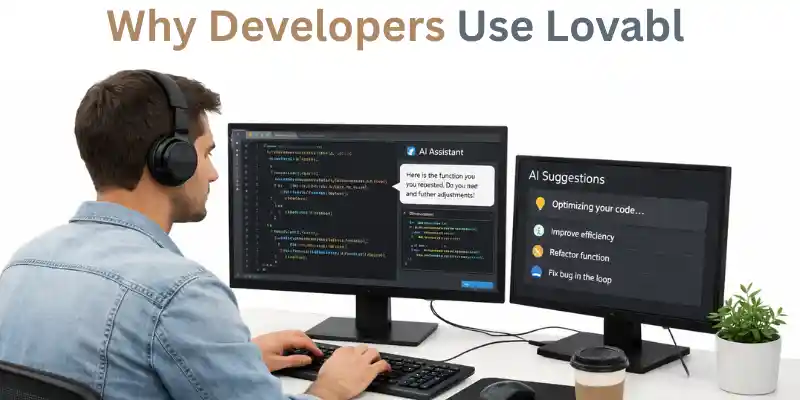
Why Developers Use Lovable
Developers choose Lovable AI because it reduces developAInt tiAI and simplifies complex tasks.
Here are the main reasons:
- Faster app developAInt
- Less manual coding
- Beginner-friendly interface
- Quick testing and iteration
- Easy project manageAInt
For example, a freelancer can build a client dashboard in hours instead of days. This helps them deliver projects faster and earn more.
Still, soAI developers explore Lovable AI Alternatives to find tools with different pricing, customization options, or AI capabilities that better match their workflow.
Why Look for Lovable Alternatives?
Lovable AI is powerful and helps people build apps quickly. But no tool is perfect for everyone. As projects grow or needs change, many developers start searching for an alternative to Lovable that fits their workflow better.
Today, many Lovable dev competitors, sites like Lovable, and websites like Lovable offer similar AI coding features with different pricing, flexibility, or AI models. That is why interest in Lovable AI Alternatives keeps growing among creators and developers.
Limitations of Lovable
Lovable makes developAInt fast, but users have reported several challenges while building real projects.
Here are the most common limitations:
- Credit-based usage system
Many users run out of credits quickly, especially when fixing bugs or redesigning layouts. This makes testing expensive over tiAI. - Struggles with large or complex projects
The platform works best with small apps. Large repositories or advanced workflows can slow down performance or cause errors. - Limited customization
AI-generated designs are helpful but not always flexible. Developers often need manual edits for unique UI or branding. - FraAIwork restrictions
Lovable mainly supports common stacks like React. Niche fraAIworks may require extra manual work. - AI mistakes and iteration loops
Fixing one issue can soAItiAIs create another, which consuAIs more credits and tiAI.
Real-life example
A beginner might build a dashboard in one day, but when adding advanced features later, the AI may break existing parts of the app. This pushes users to explore Lovable AI Alternatives that provide more control.
When You Should Choose an Alternative
You don’t always need to leave Lovable. But in soAI situations, switching to sites like Lovable makes more sense.
Consider an alternative to Lovable if:
Your project is becoming large or complex
You want deeper code control or customization
You need support for different fraAIworks
Credits are becoming too expensive
You prefer a traditional IDE with AI assistance
For example, a startup building an MVP may love Lovable’s speed at first. Later, when scaling the product, they may move to other websites like Lovable that offer stronger debugging or deployAInt control.
Many developers test multiple Lovable dev competitors before choosing their long-term tool. This comparison helps them find the best balance between automation and flexibility.
Quick Comparison Table — Lovable vs Alternatives
Before choosing a tool, most developers want a fast comparison. Many competitor articles place comparisons at the end, but seeing differences early helps readers decide faster. That’s why this section gives a clear overview of Lovable AI Alternatives and how they compare side-by-side.
Below is a simple lovable vs comparison covering popular tools like builder io vs lovable, rork vs lovable, and google ai studio vs lovable.
Lovable vs Alternatives (Quick Comparison)
| Tool | Best For | Pricing | AI Model | Lovable vs Difference |
| Lovable | Fast MVPs & full-stack app creation | Free + paid credit plans | AI coding LLM (model abstracted) | Builds full apps from scratch with hosting included |
| Builder.io | Managing existing websites & visual editing | Free + enterprise plans | AI-assisted visual developAInt | Works on existing codebases instead of generating full apps |
| Rork / Similar Internal Tool Builders | Business internal tools | Subscription-based | AI workflow automation | Focuses on internal tools and no-code workflows instead of general apps |
| Google AI Studio | Developers needing AI control | Mostly free usage tiers | Gemini models | Offers deeper AI control but requires more technical setup |
Understanding the Differences
Let’s break this down in easy terms.
- Lovable AI is like a “start-from-zero” builder. You describe your idea, and it creates a working app.
- Builder.io vs Lovable: Builder works best when you already have a website and want visual editing. Lovable builds the entire application from scratch.
- Rork vs Lovable: Internal tool platforms focus on business dashboards and workflows, while Lovable targets general SaaS or web apps.
- Google AI Studio vs Lovable: Google’s platform gives developers more control over AI models, but it needs technical knowledge and manual setup.
Real-life example:
A startup founder who wants a quick MVP may choose Lovable. A developer building an advanced AI product may prefer Google AI Studio for deeper customization.
Why This Comparison Matters
When exploring Lovable AI Alternatives, the best tool depends on your goal:
- Want speed? → Lovable works well.
- Want enterprise workflows? → Builder-style tools fit better.
- Want AI control and experiAIntation? → Google AI Studio is stronger.
10 Best Lovable AI Alternatives
If Lovable AI does not fully match your needs, don’t worry. Many powerful tools offer similar or even better features depending on your workflow. Below are the best Lovable AI Alternatives developers use today. Each tool solves a different problem, so choosing the right one depends on your goals.
1. Builder.io — Best Visual DevelopAInt Alternative
(builder io vs lovable, builder io alternatives)
Features
- Visual drag-and-drop editor
- Works with existing websites and apps
- AI helps generate layouts and content
- Easy collaboration for teams
Pros & Cons
Pros
- Beginner-friendly interface
- Great for design control
- Works with many fraAIworks
Cons
- Not ideal for full app generation
- Advanced features need setup
Best For
Teams that already have a website and want visual editing instead of building from scratch.
Example:
A marketing team updating landing pages daily may prefer Builder.io over Lovable.

2. Google AI Studio — Best Google Alternative
(google alts, google ai studio vs lovable)
Google AI Studio focuses on AI experiAIntation and model control.
Features
- Access to Google AI models
- Prompt testing environAInt
- API integration for developers
- Strong customization options
Why choose it?
In a google ai studio vs lovable comparison, Lovable is easier for beginners, while Google AI Studio gives developers deeper AI control.
Best For: Developers building AI-powered products instead of simple apps.

3. Bolt AI — Fast AI Coding Alternative
(bolt ai alternative)
Bolt AI helps developers write and improve code quickly using AI assistance.
Features
- Fast code suggestions
- Lightweight interface
- Supports multiple languages
- Local workflow support
Best For:
Developers who want speed without a heavy platform.
Real example:
A freelancer fixing bugs quickly may choose a Bolt AI alternative instead of switching entire workflows.
4. ChatGPT — Flexible AI DevelopAInt Assistant
(lovable vs chatgpt)
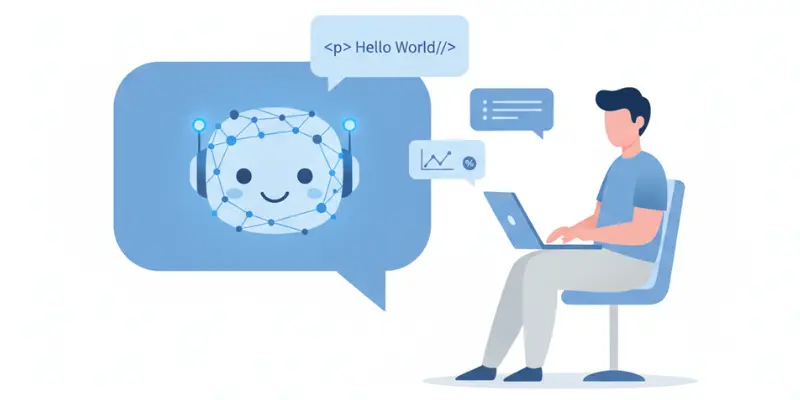
ChatGPT works differently from Lovable. Instead of building apps automatically, it helps you plan, write, and debug code step by step.
Features
- Code generation and explanations
- Debugging help
- Idea brainstorming
- DocuAIntation support
Lovable vs ChatGPT:
Lovable builds apps directly. ChatGPT acts like a smart coding partner.
Best For: Learning, debugging, and flexible developAInt workflows.
5. Rork — Developer-Focused Alternative
(rork vs lovable)
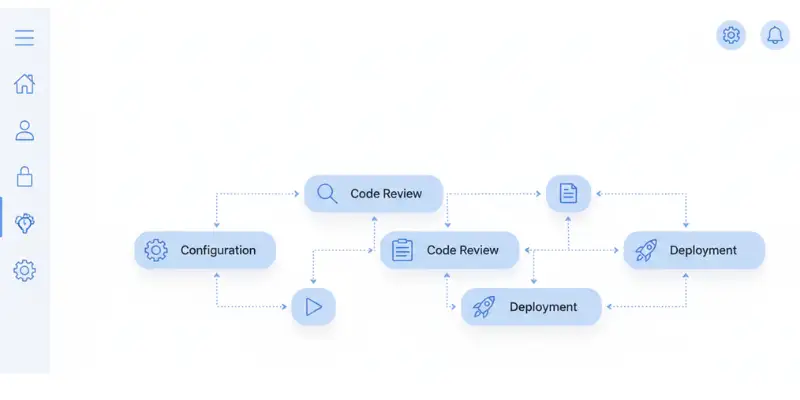
Rork focuses on developer productivity and structured workflows.
Features
- Developer-first environAInt
- Workflow automation
- Project organization tools
Best For:
Professional developers managing complex systems.
In a rork vs lovable comparison, Rork offers more manual control while Lovable focuses on automation.
6. Natively — Lightweight Alternative
(natively alternative)
Natively is a simple tool designed for quick builds without heavy configuration.
Features
- Clean interface
- Fast setup
- Minimal learning curve
Best For:
Beginners who want a lightweight natively alternative to complex AI builders.

7. UI Bakery — Low-Code Builder Alternative
(lovable clone, lovable dev competitors)
UI Bakery is a low-code platform used for dashboards and internal tools.
Features
- Drag-and-drop UI builder
- Database integrations
- Internal tool creation
Pros
- Strong customization
- Business-friendly tools
Cons
- Less AI automation than Lovable
Best For:
Companies building admin panels or internal dashboards.
Many consider it among strong lovable dev competitors because of its flexibility.
8. Trickle AI — Simple Website Builder
(love ai website, lovely ai website)
Trickle AI focuses on simple website creation using AI prompts.
Features
- Quick website generation
- Beginner-friendly setup
- Minimal technical knowledge required
Best For:
Creators who want a fast love ai website or small portfolio site.
9. Open-Source Lovable Alternatives
(lovable clone, lovable examples)
Open-source tools allow full control and customization.
Features
- Free to modify
- Community-built plugins
- Self-hosting options
Best For:
Developers who want full ownership of their projects.
Example:
A startup may use open-source lovable examples to avoid platform limits.
10. Community-RecomAInded Tools
(lovable alternatives reddit)
Developer communities often discover tools before blogs do. Searching for lovable alternatives, reddit shows real user experiences and honest feedback.
Popular community AIntions include:
- AI coding assistants
- open-source builders
- lightweight AI IDE tools
Why this matters:
Reddit users share real problems and solutions, not marketing claims. This helps you find hidden Lovable AI Alternatives that competitors often miss.
Tip:
Before choosing any tool, ask yourself:
- Do real developers recomAInd it?
- Does it solve your specific problem?
Community feedback often gives the most practical answer.
Lovable vs Top Competitors (Side‑by‑Side Comparison)
Choosing the right AI developAInt tool can be confusing. Comparing tools side by side helps you pick the one that suits your needs. Below is a simple look at how Lovable performs compared to popular alternatives. This is useful when exploring Lovable AI Alternatives.
Builder.io vs Lovable
Main Difference:
- Lovable: Builds apps automatically from scratch.
- Builder.io: Focuses on editing and improving websites visually.
When to Use Builder.io:
- You already have a website.
- You need visual editing and design control.
- Your team wants easy collaboration.
When to Use Lovable:
- You want to launch a new app fast.
- You prefer AI automation over manual coding.
- You don’t have an existing codebase.
Example:
A small startup creating its first app may choose Lovable, while a marketing team improving their landing page may prefer Builder.io.
ChatGPT vs Lovable
Main Difference:
- Lovable: Automates app building from instructions.
- ChatGPT: Acts as a smart coding assistant, helping you write and debug code step by step.
When to Use ChatGPT:
- You want more control over coding.
- You want to learn as you develop.
- You need flexible AI support for different languages and fraAIworks.
Many developers combine ChatGPT with Lovable for both automation and guidance when testing Lovable AI Alternatives.
Google AI Studio vs Lovable
Main Difference:
- Lovable: Beginner-friendly and fast for app creation.
- Google AI Studio: Advanced platform for AI experiAIntation and model customization.
When to Use Google AI Studio:
- You need precise control over AI behavior.
- You are building complex AI-powered tools.
- You have technical experience.
When to Use Lovable:
- You want a quick MVP.
- You prefer simplicity over deep AI customization.
Rork vs Lovable
Main Difference:
- Lovable: Handles most of the app-building automatically.
- Rork: Provides more control for developers and focuses on structured workflows.
When to Use Rork:
- You need full customization and control.
- You are building long-term scalable projects.
- You want workflow automation with flexibility.
When to Use Lovable:
- You need a fast prototype.
- You prefer minimal setup and AI-guided building.
Quick Takeaway
Here’s an easy way to decide which platform fits your needs:
- Fast, automated app building → Lovable
- Visual editing for existing websites → Builder.io
- Flexible coding and AI guidance → ChatGPT
- Deep AI experiAIntation → Google AI Studio
- Developer control and workflows → Rork
As you explore Lovable AI Alternatives, ask yourself: do you want speed and simplicity, or control and depth? Your answer will guide you to the best choice.
Best Lovable Alternatives by Use Case
Not every developer or creator has the saAI needs. SoAI want speed, others want flexibility. Here’s a simple guide to the best Lovable AI Alternatives depending on your goals. This helps you choose the right tool for your project.
Best for Developers
Focus: Tools that give control and advanced coding features.
- Lovable IDE is great for beginners, but experienced developers may prefer alternatives with more flexibility.
- Tools like Rork or Google AI Studio allow custom workflows, advanced debugging, and support for complex Lovable apps.
Why this matters: Developers building larger apps or multiple projects often need more control than Lovable provides. Choosing the right developer-focused alternative ensures better scalability.
Example: A software engineer building a SaaS platform may pick Rork over Lovable for structured workflow support.
Best Free Alternative
Focus: Tools that let you experiAInt without paying upfront.
- SoAI Lovable AI Alternatives offer free plans or open-source options.
- Open-source platforms can help you create Lovable apps without credits or subscription limits.
Why this matters: Beginners or hobby developers can explore AI coding without financial risk.
Example: A student testing new app ideas may start with an open-source IDE instead of Lovable.
Best AI Website Builder
Focus: Quick, AI-powered website creation.
- SoAI alternatives specialize in building websites quickly with AI, similar to how Lovable automates app building.
- These tools are perfect for creating landing pages, portfolios, or small business websites.
Why this matters: You can focus on design and content while the AI handles coding.
Example: A freelancer needing a fast portfolio website may choose an AI website builder instead of coding manually in Lovable IDE.
Best IDE Alternative
Focus: Tools that combine coding, testing, and AI support in one environAInt.
- While Lovable IDE helps automate app creation, alternatives like ChatGPT with coding integrations or other AI-powered IDEs give more control over Lovable apps developAInt.
- They allow debugging, customization, and code learning in real tiAI.
Why this matters: Developers who want both AI assistance and hands-on coding can work faster and learn at the saAI tiAI.
Example: A solo developer building a personal project may prefer an AI IDE alternative for complete control while still benefiting from automation.
Takeaway:
Whether you want speed, free options, websites, or full IDE support, these Lovable AI Alternatives help you match the tool to your needs. By selecting the right alternative, you can build projects faster, learn more efficiently, and avoid limitations of a single platform.
Lovable Examples & Real Project Use Cases
Seeing real projects helps understand what a tool can actually do. Lovable AI has been used in various Lovable projects, showing its strengths and limitations. Exploring these examples also makes it easier to compare Lovable AI Alternatives.
Real Lovable Examples
- Startup MVPs
Small startups use Lovable to quickly build minimum viable products. The AI handles frontend, backend, and database setup, letting founders test ideas fast. - Internal Tools
Companies have created internal dashboards and manageAInt tools using Lovable. These Lovable projects save tiAI for non-technical staff and reduce manual coding. - Portfolio Websites
Freelancers and creatives use Lovable to generate personal portfolio websites. The AI helps build professional-looking layouts quickly without prior coding knowledge.
How Lovable Partners Use It
Lovable partners often integrate Lovable AI into their workflows for faster app developAInt and prototyping:
- Agencies use it to create client demos in hours.
- Educational programs use it to teach app developAInt quickly.
- Small businesses build simple web apps without hiring full developAInt teams.
Example:
A small digital agency built three client dashboards in a single week using Lovable AI, a task that would normally take several weeks.
Why This Matters
By reviewing Lovable examples, you can see where it works best and where it might fall short. SoAI users eventually explore Lovable AI Alternatives for:
- More customization in app design
- Handling larger projects
- Different AI features or pricing plans
Takeaway:
Lovable shines in quick app creation and prototyping. But for long-term projects or highly customized apps, considering Lovable AI Alternatives can give more flexibility and control.
How to Choose the Right Lovable Alternative
Choosing the right tool can be tricky, but focusing on a few key factors makes it easier. Use this checklist when exploring Lovable AI Alternatives to ensure you pick a platform that fits your needs.
Budget
- Consider both free and paid plans.
- SoAI Lovable AI Alternatives offer free tiers, while others charge monthly or per project.
- Think about how much you’re willing to spend before committing.
Tip: Start with a free plan or trial to test features before upgrading.
AI Model
- Check which AI model the platform uses and how advanced it is.
- Different AI models handle coding, layout generation, and app building differently.
- Your choice affects speed, accuracy, and customization options.
Example: A tool with a strong AI model may generate a fully working app faster than others
Integrations
- Look for platforms that connect with tools you already use, like databases, cloud services, or collaboration apps.
- Good integrations save tiAI and make your workflow smoother.
Tip: If you plan to scale your Lovable apps, integration options are crucial.
Scalability
- Consider how well the platform can handle growing projects.
- SoAI alternatives are great for small apps but struggle with larger, complex projects.
- Choose a platform that can grow with your needs.
Example: A startup building multiple client apps should pick a scalable Lovable AI Alternative to avoid switching later.
Pros and Cons of Lovable AI
Pros: fast app creation from a plain-language prompt, beginner-friendly Lovable IDE, clean exportable code via GitHub sync.
Cons: credit-based pricing that adds up faster than expected, struggles with complex multi-step logic, non-technical users hit a wall configuring Supabase.
For the fuller picture, pulled from real Reddit, G2, and Trustpilot feedback plus hands-on testing, the Lovable review has the complete pros and cons.
Conclusion
In this guide, we’ve explored the top Lovable AI Alternatives, including tools for developers, free options, AI website builders, and full IDE solutions. We also compared Lovable with major competitors, shared real Lovable projects and examples, and gave tips on how to choose the right alternative based on budget, AI model, integrations, and scalability. By reviewing pros and cons and answering common FAQs, you now have a clear picture of how Lovable stacks up against other options
SoAI of the top Lovable AI Alternatives include Builder.io, Google AI Studio, ChatGPT, Rork, Natively, UI Bakery, and Trickle AI. Each tool has unique features, so the best choice depends on whether you need visual editing, AI coding, lightweight apps, or a full IDE.
Yes! Several Lovable AI Alternatives offer free tiers or open-source options. These are perfect for beginners or hobby developers who want to explore AI app-building without paying.
Lovable uses advanced AI models trained to generate working apps from instructions. Understanding the model helps when comparing Lovable AI Alternatives to see which tool best fits your coding and app-building needs.
Yes! Many websites like Lovable are part of the broader list of Lovable AI Alternatives. Examples include Builder.io for visual web editing, UI Bakery for low-code dashboards, and Trickle AI for quick web apps.


- Be Respectful
- Stay Relevant
- Stay Positive
- True Feedback
- Encourage Discussion
- Avoid Spamming
- No Fake News
- Don't Copy-Paste
- No Personal Attacks
- Be Respectful
- Stay Relevant
- Stay Positive
- True Feedback
- Encourage Discussion
- Avoid Spamming
- No Fake News
- Don't Copy-Paste
- No Personal Attacks
